
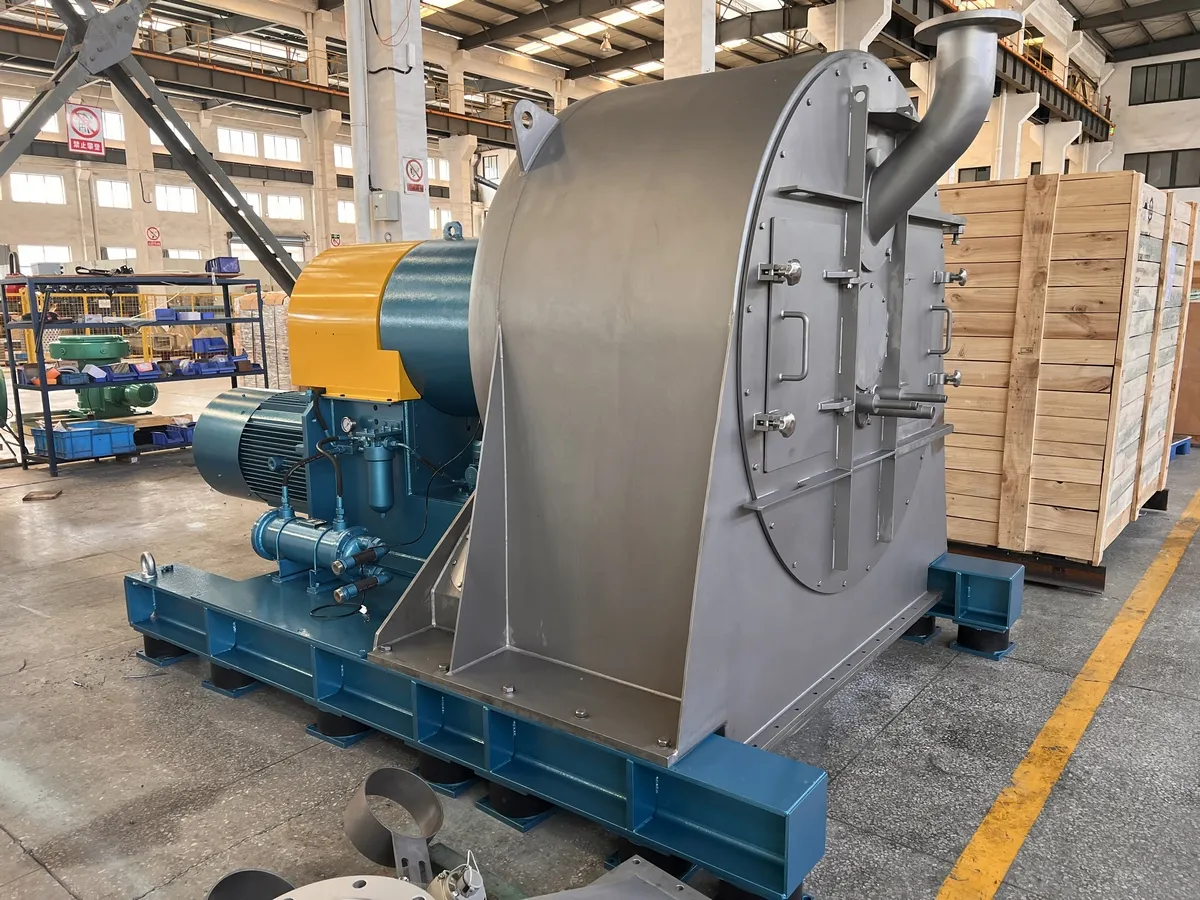
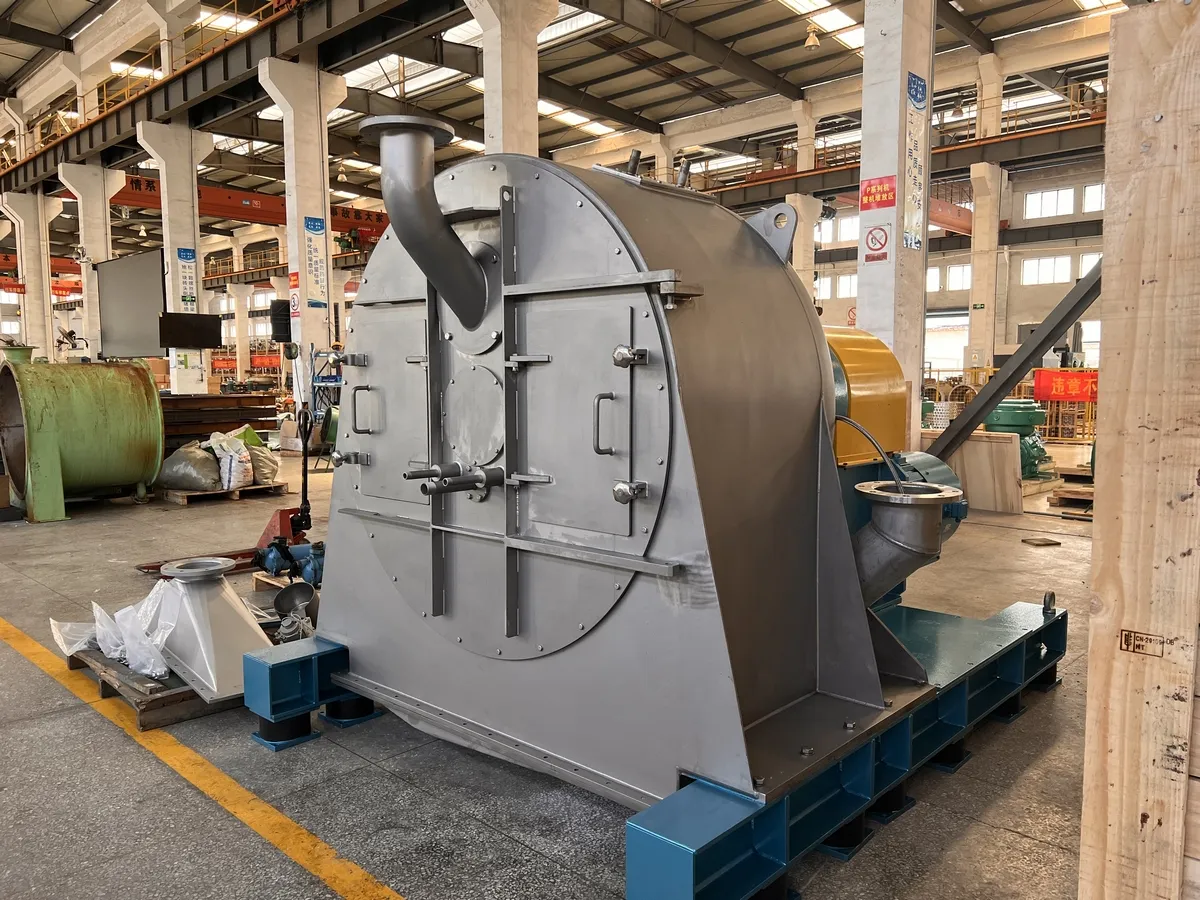
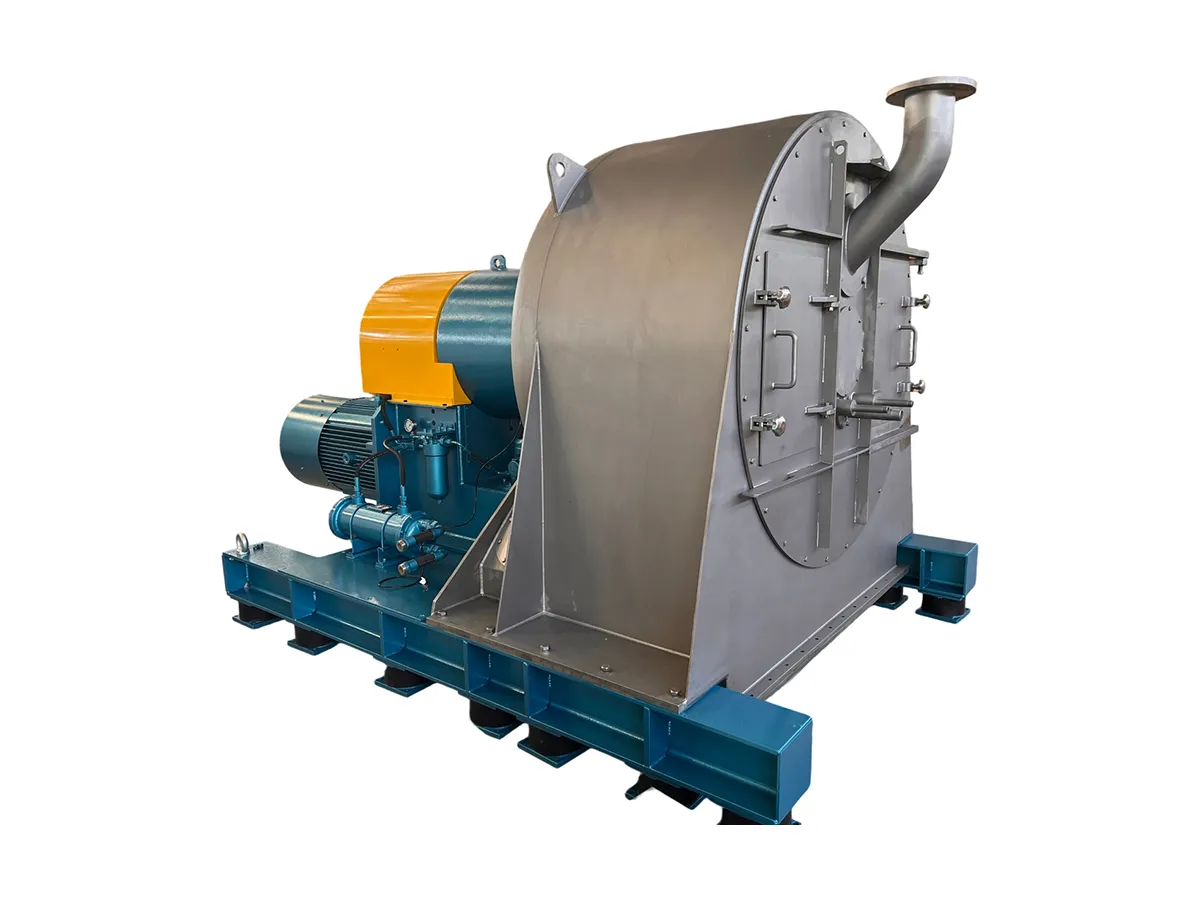
Screen Scroll Centrifuge (Continuous Filtration)
The HZZZ screen scroll centrifuge is a large, continuously operational filtration centrifuge that operates with a single-cone drum structure and scroll solids discharge. It is capable of continuously operating the feeding, dewatering, rinsing, and discharge processes, and is well-suited for the separation of materials with solids content ranging from 20% to 60% and particle sizes exceeding 0.04 mm.
The machine is extensively employed in the pharmaceutical, mining, environmental, salt-production, and chemical industries. It is particularly effective in the removal of crystalline particles that are oily, colloidal, or organic in nature. It has been effectively implemented in the production of sodium chloride, soda ash, cobalt chloride, cobalt sulfate, ammonium chloride, sodium carbonate, sodium sulfate, ammonium sulfate, and copper sulfate.
- Model:
LLW-1100 - Basket Diameter (mm): 1,100
- Screen Basket Length (mm): 730
- Cone Angle: 20°
- Max. Speed (rpm): 1,000
- RCF (relative centrifugal force): 616
- Differential Speed (rpm): 33
- Gear Transmission Ratio: 30.4:1
- Capacity (m3/h): 20-40
- Main Motor Power (kW): 110-132
- Machine Weight (kg): Approx. 7,000
- Overall Dimensions (mm): 3,700×2,400×2,300
- Lubrication Type: Oil
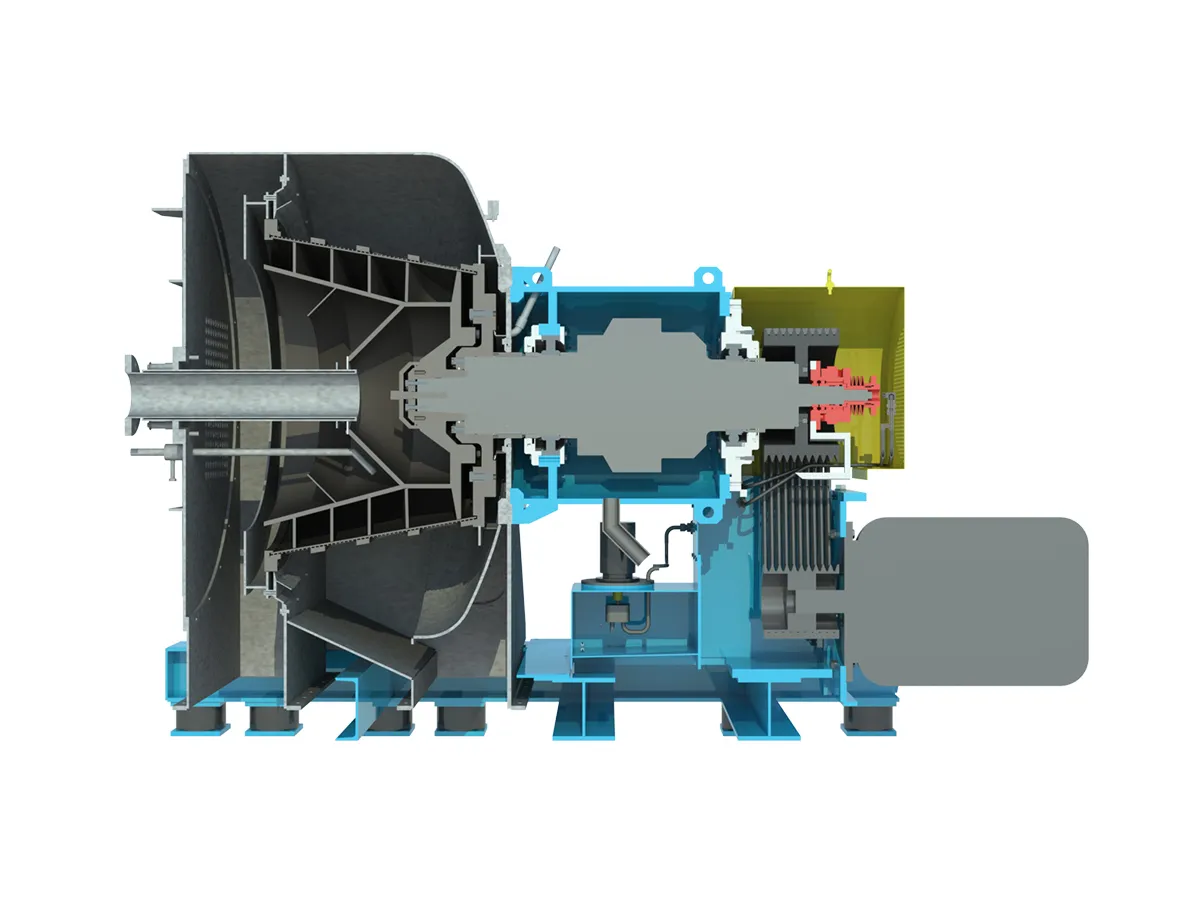
The screen scroll centrifuge operates on the principle of centrifugal filtration, employing continuous scroll discharge. Its filtration medium consists of the screen mounted on the inner wall of the drum, as well as the cake layer that accumulates on the screen following filtration. Consequently, the solid particles of the material must possess a certain degree of rigidity, as the filtrate would be unable to pass through the cake layer. The internal planetary gear train of the differential (gearbox) distributes the motor's input speed to the pusher scroll and the drum. The cake layer that is accumulating on the drum is continuously pushed toward the large end of the drum as a result of the established speed difference between the pusher scroll and the drum. The entire separation process can be interpreted as a series of two actions: filtration and dewatering, which involves the release of filtrate that is trapped in the spaces between the solid particles.
Spray washing can be implemented when a washing process is necessary, as the scroll propels the cake toward the discharge port, resulting in satisfactory washing outcomes. The mother liquor from the concentration zone and the liquid from the filtration zone can be collected and discharged separately.